
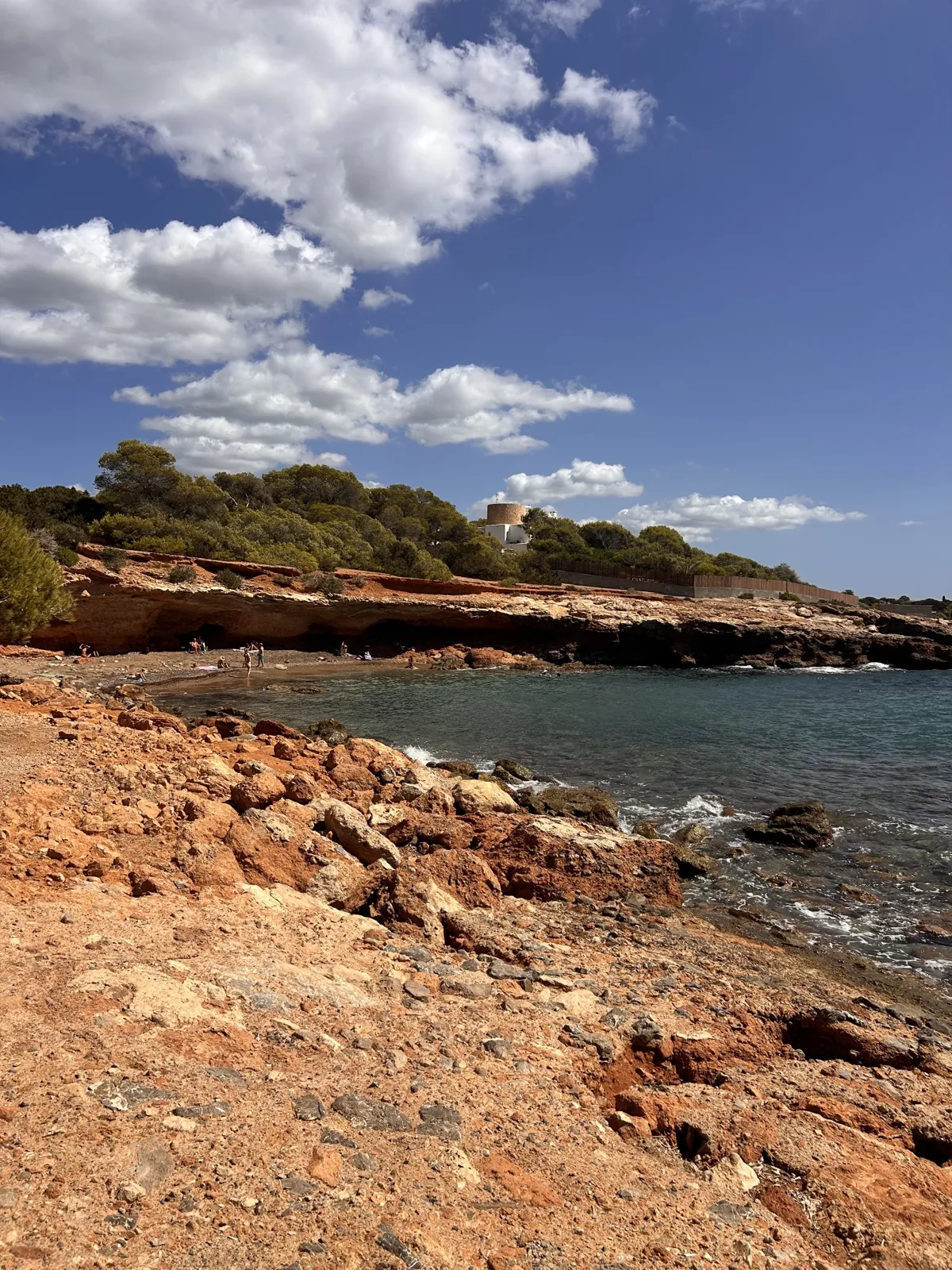
Beaches
Reading the Wind: How to Choose an Ibiza Beach on Any Day
There is a habit that separates people who have spent a season on Ibiza from people who are visiting for the first time. Before choosing a beach, they check the wind.
It sounds fussy. It is the difference between a flat, clear cove and a day of churned-up water, blowing sand and an umbrella you cannot keep upright. And because Ibiza is only about 40 kilometres end to end, there is always a sheltered coast within a short drive.
Why it matters more here than elsewhere
The island is small, so a wind from any direction hits one coast squarely and leaves the opposite coast glassy. There is no gradual transition. You either drove to the exposed side or you did not.
Water clarity is the second effect and the one people notice most. Onshore wind stirs up sand and posidonia, and a cove that is turquoise on a still morning can be brown and cloudy by afternoon on the same day.
The four winds
Tramuntana, from the north. Cold and often strong, most common outside high summer. The whole north coast becomes exposed and uncomfortable. Head south: Es Cubells, Cala Jondal, Cala d'Hort and the southern coves stay protected and calm.
Llevant, from the east. Hits the entire east coast including Santa Eulalia and the coves around Cala Llonga. Move west: Cala Bassa, Cala Conta and the western beaches will be sheltered.
Ponent, from the west. The reverse. The popular western beaches take the brunt of it, sometimes with real swell in autumn. The east coast and the sheltered northern inlets are the answer.
Migjorn, from the south. Warm and often humid. The southern coast becomes choppy. The north comes into its own: Portinatx, Cala Xarraca and Benirràs sit in protected inlets and stay calm.
Coves that stay calm in almost anything
A few places are protected by their geography rather than by the wind direction of the day. Deep, narrow inlets with high ground on both sides shrug off most conditions.
Cala Vadella and Cala Xarraca both sit in tight bays with hills on either side. Portinatx is a series of small protected inlets rather than an open beach. These are the fallback options when the forecast is confused or changing.
The afternoon pattern
Even on a still day, a sea breeze commonly builds through the afternoon in summer, arriving from the sea towards the warm land. It is usually light, it is usually welcome, and it tends to drop again in the early evening.
The practical consequence: mornings are consistently calmer than afternoons. If you want flat water for swimming or paddleboarding, go early. If you want the beach to be less crowded, go late and accept the breeze.
How to check
Any standard wind or sailing forecast app will give you direction and strength for the next few days. You are looking for the direction more than the number. Once you know which way it is coming from, the choice of coast follows automatically.
One local shortcut: if you can see whitecaps from the coast road on one side of the island, drive to the other.
Where you stay changes the calculation
If your villa is in the centre of the island, every coast is within reach and this article is purely useful. If you are on the coast itself, you are committed to one side for the easy days, and it is worth understanding which winds affect your stretch before you book.
We are happy to answer that question for any specific property.
Frequently Asked Questions
Which beaches in Ibiza are sheltered from the wind?
Deep, narrow inlets with high ground on both sides are the most reliably sheltered. Cala Vadella, Cala Xarraca and the inlets around Portinatx stay calm in most conditions. Otherwise, choose the coast opposite the wind direction.
Where should I go in Ibiza when the north wind blows?
Head to the south coast. Es Cubells, Cala Jondal and Cala d'Hort are protected when the tramuntana comes from the north, while the entire northern coastline becomes exposed and choppy.
Why is the sea cloudy at some Ibiza beaches?
Onshore wind stirs up sand and seagrass, turning clear water murky within hours. The same cove can be turquoise in the morning and cloudy by afternoon. Choosing a beach on the sheltered side of the island usually solves it.
Is it windy in Ibiza in the summer?
Strong winds are less common in July and August than in spring and autumn, but a light sea breeze typically builds through the afternoon and drops again in the evening. Mornings are consistently the calmest part of the day.

About the author
Peter Van Elsen, Founder, Vacation in Ibiza
Peter Van Elsen built his career in hospitality in Antwerp, where he ran his own restaurant and catering business. He has been coming to Ibiza since 1995 and has lived on the island since 2018. After years of guiding visitors around the island, he now selects and manages the private villas featured on Vacation in Ibiza, and writes the journal from first-hand knowledge of every corner of the island.
Hospitality entrepreneur (restaurant & catering, Antwerp) · Visiting Ibiza since 1995 · Ibiza resident since 2018 · Former island guide
Villas mentioned in this article

Continue reading
San Juan and the North: The Quietest Corner of Ibiza
The north is the part of Ibiza that did not change. Farmland, small coves, and villages where the loudest thing on a Tuesday is a tractor.
Ibiza in September: Why It Is the Month We Recommend Most
The sea is warmer than it is in June, the crowds drop off after the first week, and everything is still open. September is the month we book for ourselves.